Point it at anything and it tells you, live, what would make the photo better. Straighten the horizon. Move the subject off centre. Step out of the backlight. One message at a time, outside the viewfinder, never over your picture.
Requires iPhone 15 Pro or later. Nothing leaves your phone.
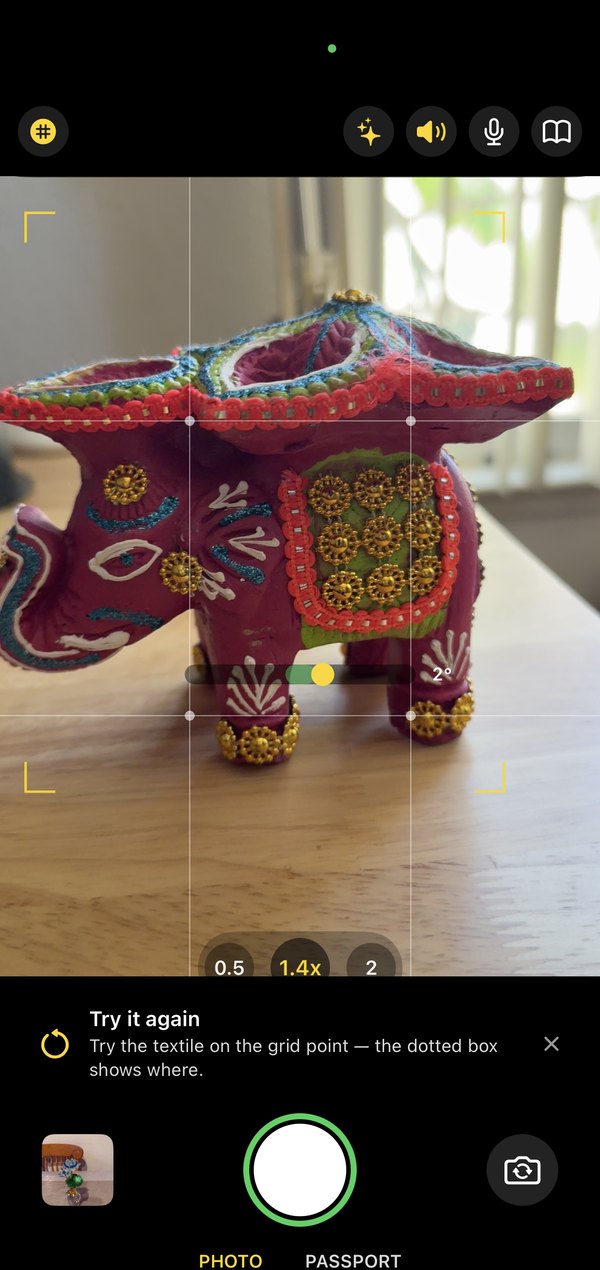
Level, exposure, focus, backlight, headroom, off-grid placement — seventeen things a good photographer checks without thinking. Fotog checks them for you and says only what matters, when it matters.
Tap Sparkles for measured goals with a finish line, and turn on Coaching to be talked through them one at a time. Ask a question by voice — "why is my photo blurry?" — and get a plain answer.
Retake a shot and Fotog shows both photos side by side with what actually changed, in numbers. Seven verdicts, no single score. Then you say which one you prefer — that's the answer that counts.
The grid, the level and the subject ticks show what the camera sees. A green ring means it's clean.
If something's off, a single line tells you what. Warnings are instant; there's no nagging when it's fine.
After an improvable shot, Fotog invites a second take and keeps the pair.
Wipe between the two, read the rubric, and pick the one you like. Learn cards explain every term.
Put the phone on a stand, switch to Passport, and follow the spoken checklist. Fotog checks head size, position and lighting against the US 2×2 inch template, counts down, and saves a 1200×1200 photo ready to upload or print.
No trip to a shop, no waiting, and the photo never leaves your phone.
Passport mode is a photography aid, not a government service. It helps you compose a photo to a standard template; it does not guarantee acceptance.Questions, feedback, or something unexpected? Reach out directly and we'll get back to you.
Contact →Fotog has no accounts, no analytics, no ads, and no network code. Everything runs on your iPhone. Airplane mode is a feature, not a limitation.
Privacy Policy →iPhone 15 Pro or later, running iOS 26. Advice and voice answers use Apple's on-device models, which need the Pro-class chip. Voice coaching uses about as much battery as a video call.
More from Labham →